Arnold School of Public Health
- SC.edu
- Study
- Colleges and Schools
- Arnold School of Public Health
- Our Faculty & Staff
- Nelís Soto-Ramírez Ph.D., MPH, M.S.
Our Faculty & Staff
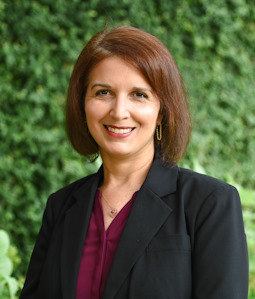
Nelís Soto-Ramírez, Ph.D., MPH, M.S.
| Title: | Clinical Assistant Professor |
| Department: | Epidemiology and Biostatistics Department Arnold School of Public Health |
| Email: | sotorami@mailbox.sc.edu |
| Phone: | 803-777-7225 |
| Office: | Discovery I 915 Greene Street, 443 |
| Resources: | Google Scholar Curriculum Vitae Websites: Researchgate S.T.A.R.T.T.-A.I. School of Behavioral Health |
Research and Teaching Interests
Dr. Nelís Soto-Ramírez is a Clinical Assistant Professor in the Department of Epidemiology
and Biostatistics at the University of South Carolina's Arnold School of Public Health.
Her research focuses on maternal and child health across the life course, including
perinatal mental health, early-life immune and epigenetic influences on child health,
and social and environmental determinants of health. Her work examines how early
exposures, such as infant feeding and maternal immune markers, shape risks for asthma,
eczema, and other child health outcomes. She also studies mental health service access
and telemental health among children and youth involved in child welfare and juvenile
justice systems, as well as protective factors that support migrant and seasonal farmworker
families. Dr. Soto-Ramírez also serves on the leadership team of the USC Center for
School Behavioral Health, where she collaborates across disciplines to advance equitable
behavioral health research, practice, and partnerships for children, adolescents,
and families.
Dr. Soto-Ramírez uses epidemiologic, longitudinal, mixed-methods, and administrative
data approaches to produce evidence that informs equitable public health practice
and policy. Her current work includes participant-centered approaches to improve early
identification of perinatal depression during pregnancy and the postpartum period.
In her teaching, Dr. Soto-Ramírez helps students apply epidemiologic and quantitative
methods to real-world public health questions. She teaches quantitative methods, public
health surveillance, applied practice, and integrative learning courses and mentors
students in translating data into actionable evidence.