Find Out More
Epidemiologists design and conduct investigations aimed at improving the health of groups of people by combining knowledge from the social sciences, medicine, biology, the environment, and statistics.
July 6, 2026 | Erin Bluvas, bluvase@sc.edu
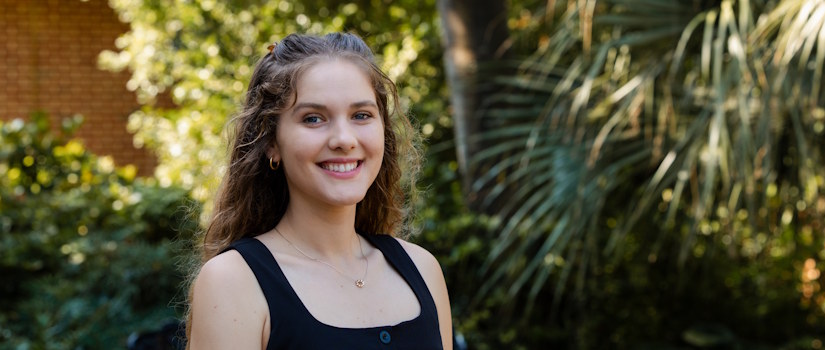
Graduate school has taught Naomi Higgins what type of epidemiologist she wants to be – someone who works in the field or a lab rather than solely crunching numbers behind a desk. The May graduate immersed herself in hands-on research during her Master of Public Health (MPH) in Epidemiology program, and now she’s embarking on the ultimate boots-on-the-ground experience with a Council of State and Territorial Epidemiologist Applied Epidemiology Fellowship in Salt Lake City, Utah.
“What attracted me most to the fellowship was that it is modeled after the CDC's Epidemic Intelligence Service, the ‘disease detectives,’ which first sparked my interest in pursuing a career in public health and epidemiology back when I was an undergrad,” says Higgins, who majored in biological sciences at Clemson University. “This fellowship will allow me to continue developing both technically and professionally while gaining hands-on experience in the field. It is exactly the type of opportunity that will help bridge the gap between graduate school and the epidemiology career I hope to build.”
Higgins already had her sights set on obtaining a post-graduation applied epidemiology fellowship when she first came to USC in 2024. In fact, she discovered the Council of State’s program during her first semester and made a note to apply a year later to align with her 2026 graduation.
“I'll admit that when I submitted my application in December, my first thought was, ‘That was good practice. I'll never get this,’” she recalls.

After undergoing three phases of the application process, Higgins not only got a placement, but she was also matched with her top choice. She believes her success in securing such a competitive fellowship is the result of her personal story (losing her childhood best friend changed the way she approaches life – leading her to pursue opportunities even when they seem out of reach) and the array of experiences she’s pursued during her master’s program.
Higgins arrived at the Arnold School with interests in maternal and child health – gaining research experience in the Global and Maternal Health Lab and completing a Maternal and Child Health Experiential Learning Fellowship. She also contributed to the REMEDY Study, a dietary intervention for early onset colorectal cancer.
After learning about One Health epidemiology, Higgins expanded her interests to include zoonotic diseases (illnesses that can spread between animals and humans). To gain experience in these areas, she contributed to research in USC’s Institute for Infectious Disease Translational Research as a graduate research associate where she was immersed in vector-borne disease endeavors.
Higgins enjoyed being involved in every stage of a mosquito West Nile virus research project – from collecting and identifying mosquitoes, to running laboratory tests and analyzing results, and finally presenting her findings through presentations and journal publications.
“Being able to contribute at every step showed me how much I value interdisciplinary work and seeing the full picture of a public health threat,” she says. “I’ve learned I enjoy having a balance between working in the lab or office and being out in the field. Having both perspectives allows for a better understanding of office processes while also providing important community context, which ultimately leads to more informed and relevant public health work.”
This is exactly the type of work Higgins will be engaged in during her two-year fellowship. She’s grateful for the opportunity, stating that each academic and professional experience helps her carve out a path toward the career and life she envisions. Higgins also has a long list of mentors and supporters who helped her get to this point, including research assistant professor Kyndall Dye-Braumuller, epidemiology associate professor Melissa Nolan and her lab team, MPH program director Myriam Torres, the members of her cohort, and many others.
“Throughout graduate school, I made it a goal to build meaningful relationships with
peers, professors and colleagues,” she says. “These relationships have been some of
the most valuable parts of my experience and have shaped both my professional growth
and future opportunities.”
Epidemiologists design and conduct investigations aimed at improving the health of groups of people by combining knowledge from the social sciences, medicine, biology, the environment, and statistics.
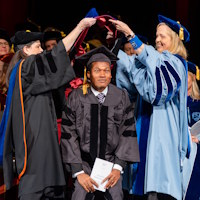
The Arnold School is proud of our 2026 graduates, who will go on to change the world locally and globally. Learn about some of the other outstanding individuals who completed one of our 34 programs this year.